

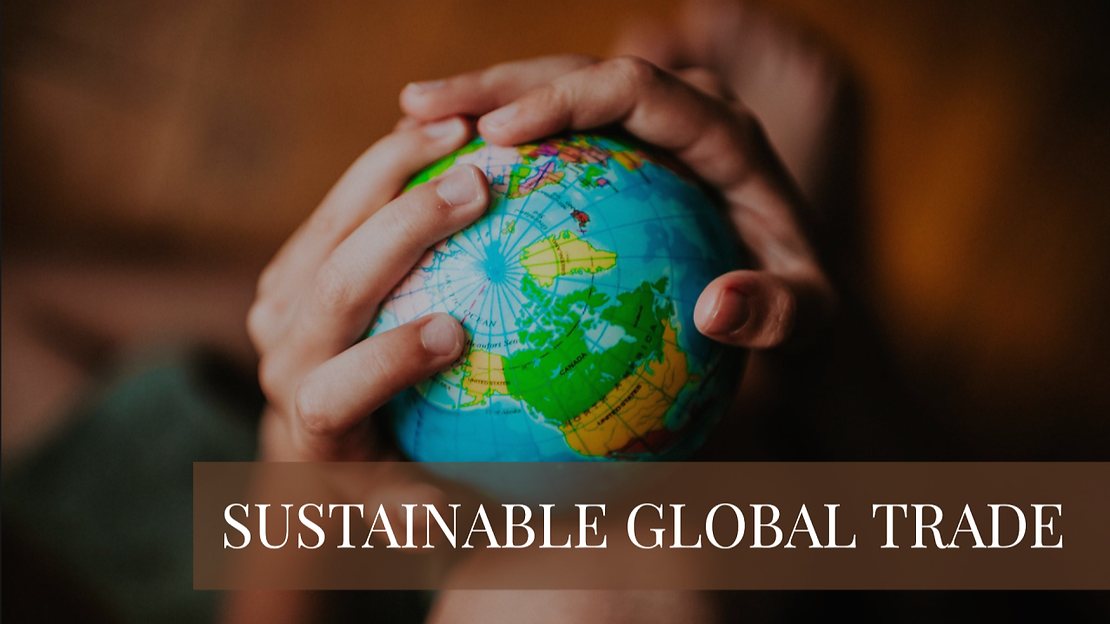
Governance, risk and compliance for global trade: product authenticity, data, climate, regulatory and cyber risk designed into operations.
Governance, risk management and compliance (GRC) is becoming central to sound, trusted global trade and supply chain operations in the age of Web 3.0 and beyond.
As trade and supply chains become more automated, the list of risks grows and new vulnerabilities appear on many fronts: the authenticity of goods, data privacy and ownership, climate change, and regulatory compliance, including the classification of goods, import safety and permissibility, and the use of legal identifiers.
In today's always-on, interconnected world, large-scale, end-to-end trade and supply chain ecosystems are no longer an ambition; they already exist. Organizations of every size therefore need integrated GRC practices that protect those ecosystems: practices that allow early planning and timely management of vulnerabilities, reduce costly harm, and create an agile, resilient trade and supply chain environment.
There are many ways to build a highly resilient trade and supply chain environment. Organizations that aim to lead in this space should treat the following as minimum standards of excellence:
- Design operations for full compliance. Architecting trade and supply chain operations to comply fully with applicable federal and state laws and regulations, and with directives and rules from agencies such as US Customs and Border Protection, is the first step toward a resilient GRC environment.
- Build integrated "source to business or consumer" processes. End-to-end processes backed by strict governance and aligned by design with leading practices are key to future-proofing every flow of goods, within the country and across borders.
- Follow globally accepted best practices. Guidance from organizations such as the World Trade Organization (WTO) and GS1 (for example GTINs and UPCs), and the mandates of customs authorities and unions (for example the EU Customs Union), strengthens governance and compliance in the classification, identification, processing, inspection, clearance and reporting of goods, and can greatly improve trade across regions.
- Plan for contingencies and business continuity. Like much of the global economy, trade and supply chains were hit hard by the COVID-19 pandemic. The ripple effects were severe: disruptions and restrictions on the flow of goods led to longer lead times, backlogs and shortages around the world. Contingency and business continuity planning is no longer a nice-to-have; it is essential to sustaining supply chains over the medium and long term, under all conditions.
- Manage climate risk. The sector is more exposed to climate risk than ever, from the heavy fuel consumption of aircraft and large ships to the emissions and potential dumping along their routes between origin and destination. This calls for climate risk and mitigation strategies based on leading frameworks (for example TCFD), translated into comprehensive emissions tracking and reporting to measure progress.
- Protect data and systems from cyber threats. Cybersecurity and ransomware attacks are an increasingly visible threat. Criminals can bring supply chains to a halt, as in the ransomware attack on Colonial Pipeline in the US;1 software failures have grounded airlines at peak travel times;2 and critical national infrastructure can become vulnerable very quickly.3 The cost of recovering from such incidents without disrupting operations can be very large. Organizations need robust processes for data security and business continuity, and must close the vulnerabilities created by weak processes.
Finally, we believe that sound risk management is the first step toward a more competitive ecosystem: lower costs and less downtime in moving goods, as little waste as possible along the way, and the highest degree of alignment with global goals such as the Sustainable Development Goals (SDGs) and with national mandates.
The views expressed in this article are those of Makki Elfatih (Hkdolts) and Laxmi Ramanath (La Meer Inc.) and do not constitute professional or legal advice. Connect with us on LinkedIn, or reach out at engage@hkdolts.com or info@lameerinc.com.
Notes
- The Attack on Colonial Pipeline: What We've Learned & What We've Done Over The Past Two Years, CISA ↩
- Global IT Outage - Airline Industry: Cyber and Turbulence Risk, International Insurance Society ↩
- Cantwell Opening Remarks at Hearing on Aviation Cybersecurity Threats, US Senate Committee on Commerce, Science and Transportation ↩