

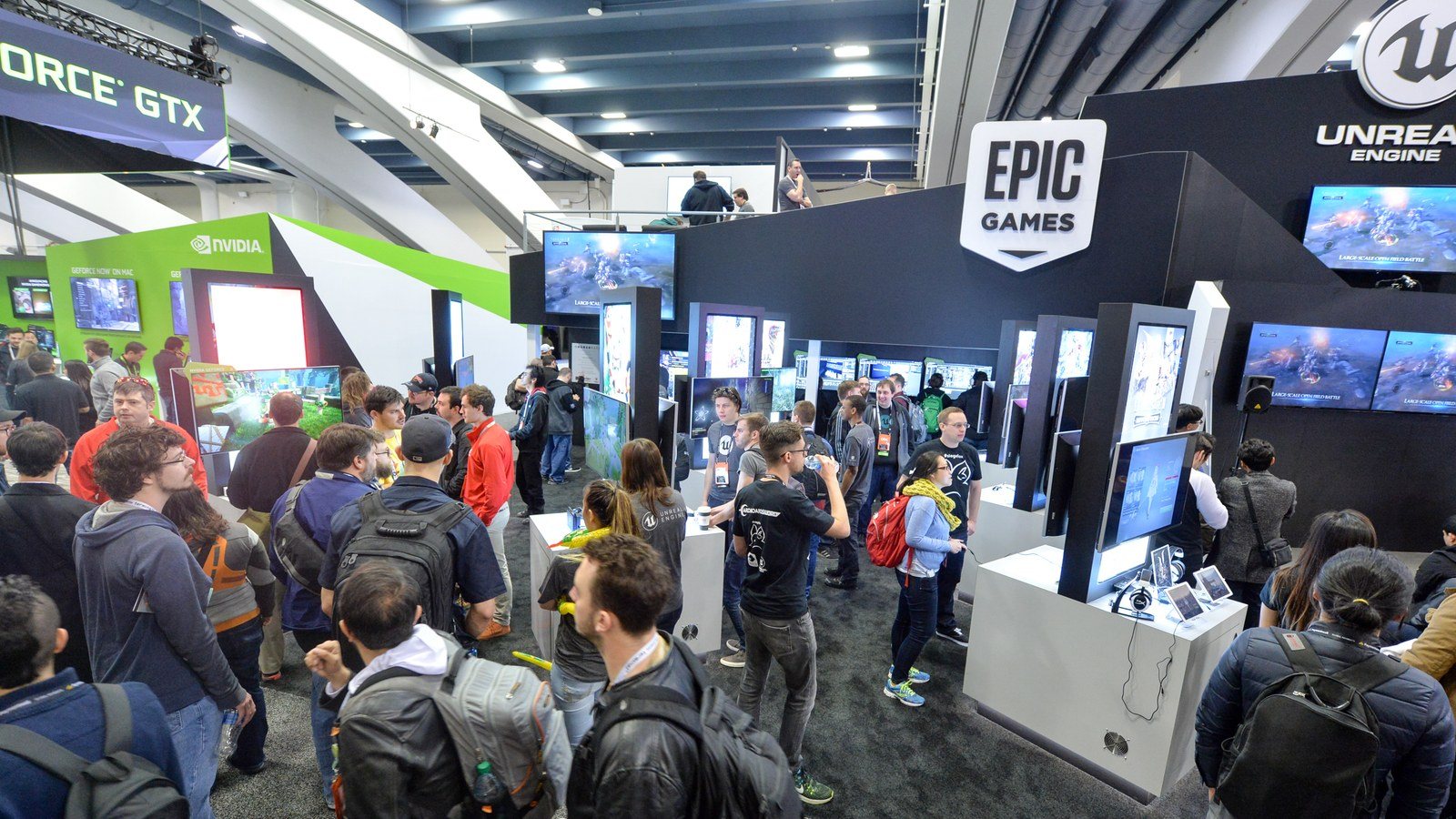
Epic said metaverse out loud years before most and argues no one should own it. Unreal Engine, MetaHuman, Fab, UEFN and Pixel Streaming are what it actually ships.
Positioning: all in, publicly
Tim Sweeney defines the metaverse as a "real-time, computer-powered 3D entertainment and social medium", a definition he traces to Neal Stephenson's Snow Crash. He has argued repeatedly that no single company should control it, pushing instead for interoperable, open standards.
Epic backed that view with capital: a $2 billion raise from Sony and KIRKBI in 2022, explicitly for metaverse building, at a $31.5 billion valuation. That was two years before most enterprise players would say the word out loud.
Metaverse Products: core engine and ecosystem
- Unreal Engine 5: Stable at UE 5.7, with UE6 previewed in early access at State of Unreal 2026. Nanite handles virtually unlimited geometry and Lumen provides real-time global illumination.
- MetaHuman: Browser-based character creation through Pixel Streaming. A new Meshcapade plugin extracts full-body animation from ordinary video, with no motion-capture suit.
- Fab: Launched in October 2024, unifying the Unreal Engine Marketplace, Sketchfab, Quixel and ArtStation. Assets work across Unreal, Unity and UEFN, deliberately cross-engine.
- UEFN and Verse: Public beta since March 2023, paired with Creator Economy 2.0, which pays 40% of Item Shop net revenue to eligible island creators.
Metaverse Products: visualization and delivery
- Twinmotion: Real-time visualization for architecture, engineering and construction, automotive and product design, built on Unreal Engine (current release 2026.1).
- Digital twins: Geospatial-scale twins combining Unreal Engine, Twinmotion, Cesium for Unreal and 3D Tiles, marketed across AECO, automotive, fashion and retail.
- Pixel Streaming: WebRTC-based cloud rendering that streams Unreal Engine output to a browser or phone with no local GPU. It powers MetaHuman Creator and enterprise digital twins on cloud infrastructure such as AWS EC2.
Metaverse Applications
- Virtual production: LED-volume filmmaking where Unreal Engine renders live backgrounds synced to the camera through systems such as nDisplay. Pioneered at scale on The Mandalorian, it is now standard across film and episodic TV.
- Enterprise digital twins: Industrial and smart-city visualization at full CAD and BIM fidelity, showcased with Schneider Electric and Hewlett Packard Enterprise at NVIDIA GTC 2026.
- User-generated worlds in Fortnite: Over one million islands published through UEFN and Verse, with roughly 40% of all Fortnite playtime spent in creator-made content.
Product-Enabled Use Cases
- The Mandalorian, season 1 (2019): ILM's StageCraft LED volume (20 ft high, 270°, 75 ft diameter) ran on Unreal Engine, and over half the season was filmed in-camera, removing location shoots.
- Argonne National Laboratory: A published UE5 case study of a real-time HMI digital twin of the METL facility, used to monitor and visualize live industrial operations.
- Fortnite Creator Economy 2.0 (ongoing): 40% of Item Shop net revenue and most real-money purchases go directly to island creators through a defined, published payout mechanism.
- Sony and KIRKBI investment (2022): $2 billion at a $31.5 billion valuation, one of the largest commitments any company has made explicitly under the metaverse banner.
Business Model
Unreal Engine is free to download and use up to $1 million in lifetime revenue. Games above that pay a 5% royalty on lifetime gross (3.5% if launched on the Epic Games Store). Non-game use above $1 million in annual revenue costs $1,850 per seat per year, bundling Twinmotion and RealityCapture. It is a free-to-use engine funded by royalties at scale, not by seat licenses or metaverse-specific fees.
Sources
Every figure comes from Epic Games' own documentation and press releases, ILM and Lucasfilm materials on virtual production and StageCraft, and contemporaneous reporting by Bloomberg, CNBC, CG Channel and fxguide. No projected, aspirational or unverifiable statistics are included.
Presented by Hkdolts at the Metaverse Standards Forum Use Case Task Force Spotlight Series, 14 August 2026.